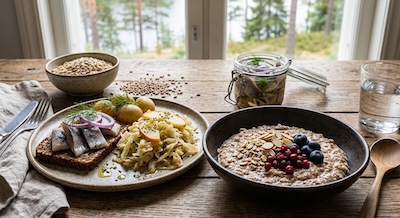
Most diet advice comes with a shopping list of pricey imports: olive oil, avocados, specialty powders. The Nordic diet is different. It is built on the kind of plain, hardy food that has fed farm families in cold places for generations: oats, rye, root vegetables, cabbage, apples and fish.
A new study suggests it may help people live a little longer, too.
What the new study found
Researchers led by Michael Fridén of Aarhus University in Denmark analyzed health data from more than 64,000 middle-aged and older adults in Sweden, ScienceAlert reported on October 8. The work was published in The American Journal of Clinical Nutrition.
The team used the data to imitate a long-term trial covering 24 years. They estimated that strictly following a healthy Nordic diet lowered the risk of death from any cause by 4 percent compared with following general health advice, and by 6 percent compared with no diet change at all.
The benefit looked larger in one subgroup that included more women and more adults over 65 with high blood pressure and diabetes.
Read the fine print
Those are modest numbers, and the researchers are careful about them. This was not a clinical trial. It was a statistical model built from observational data, and it assumes people stick to one diet for decades, which few people do, ScienceAlert noted. The subgroup findings still need to be confirmed. And there is far less research on the Nordic diet than on the Mediterranean diet.
The study also found no clear reduction in serious liver problems compared with Nordic health recommendations from 2023.
In other words: this is a helpful nudge, not a miracle cure.
Stronger evidence from a real trial
The best evidence comes from a 12-month Swedish trial in adults with prediabetes or type 2 diabetes, led by Ulf Risérus of Uppsala University. Participants swapped white bread and pasta for porridge and rye bread, used rapeseed (canola) oil instead of butter, and ate more local produce and fatty fish.
The Nordic group improved on blood sugar, cholesterol, liver fat and inflammation, according to the researchers writing in The Conversation. Participants with diabetes saw just over 20 percent less liver fat, ScienceAlert reported.
“More than half of the participants also saw a remission of their fatty liver disease,” Risérus said.
An earlier study that followed 57,053 Danes for 12 years found that men who ate the most Nordic-style foods had a 36 percent lower risk of dying than those who ate the least. That figure comes from one group of men, and it shows a link, not proof that the diet caused the difference.
What’s on the plate
According to the Aarhus researchers, the healthy Nordic diet centers on:
- Whole grains like oats and rye, including porridge and rye bread
- Fatty fish like salmon, herring and mackerel
- Root vegetables and cabbages
- Apples, pears and berries instead of imported fruit like oranges and bananas
- Rapeseed (canola) oil as the main fat
- Modest amounts of dairy and smaller amounts of meat
- Seasonal, home-cooked meals
Easy ways to start
The researchers stress that no superfoods are needed. They wrote that “consistent, balanced choices that can fit into your everyday life” matter more than perfection. Their practical suggestions:
- Swap refined grains for whole grains, aiming for about 90 grams a day.
- Eat fatty fish more often each week.
- Cook with unsaturated oils like canola instead of butter.
- Add beans, root vegetables and whatever produce is in season.
- Cut back on highly processed foods.
The authors also wrote that “this more Nordic way of eating may actually be an easier diet to follow” than some better-known plans.
The bottom line
The Nordic diet won’t add decades to your life, and the newest study’s numbers are modest. But the overall picture is consistent: whole grains, fish, root vegetables and simple home cooking are good for you.
Best of all, it’s food a self-reliant household can afford and understand. No fancy labels, no supplements, no imports required. A pot of oatmeal, a pan of roasted roots and a can of herring are a pretty good place to start.
Sources
- ScienceAlert: The Mediterranean Diet Has a Northern Cousin That May Also Help You Live Longer (Oct. 8, 2026)
- The Conversation via 1News: How a traditional Nordic way of eating could help you live longer (Sept. 23, 2026)